Online Vendors
  US Online Vendors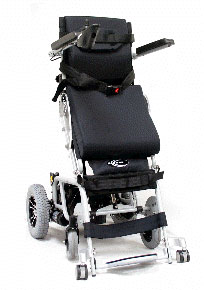
Karman Stand-up Wheelchair
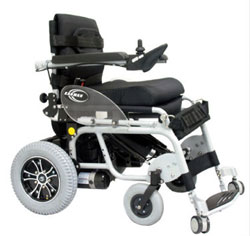
Power Stand-up Wheelchairs
Power stand-up wheelchairs are fairly rare and there are only a handful of manufacturers in the world who build these specialized wheelchairs. I know of three, Levo, Lifestand and Karman but there may be others. As far as specifications and features are concerned, the stand-up power wheelchairs are pretty similar to most power bases with the exception that there are no choices for seats and seat size options are more limited.
While it's mostly adults who buy the stand-up wheelchairs there are pediatric models available from some manufacturers and the benefits of these wheelchairs apply equally to both adults and children.
When the wheelchair is in the seated position it will operate much the same as any other power wheelchair. When the user is in the standing position the user will often be able to drive the wheelchair but the speed will be substantially reduced. The intention of being able to drive the wheelchair while standing is to enable short trips around a room or smooth level surface for performing multiple tasks but not for traveling any distance or for negotiating any type of ramp or slope.
Benefits
There are both psychological and physiological benefits to the wheelchair user being able to stand. Users will often enjoy an improved quality of life due to both of these types of benefit.
Physiological benefits of being able to stand can include:
- Helps prevent pressure sores.
- Helps improve circulation.
- Lessens muscle spasm and contractions.
- Helps in preventing atrophy of the leg muscles.
- Helps maintain bone integrity.
- Helps reduce swelling in the lower limbs.
- Helps to improve range of motion.
- Strengthens the cardiovascular system.
- Builds endurance.
- Helps reduce infection by assisting kidney and bladder function.
- Can improve bowel regularity and function.
Psychological benefits of being able to stand can generally center around the user's self-esteem which is improved by their enhanced independence by being able to do things and reach things that require standing, their feeling of being less handicapped and socially accepted because they are standing and at the same eye level as their peers.
Limitations
There are a few limitations as to who can use a stand-up wheelchair. The biggest is the users legs and joints must be able to support the user's torso weight without pain, discomfort or doing any damage and the user's hips and knees must have a full range of motion as they will be flexed during use. The advice of a medical professional should be obtained before purchasing a stand-up wheelchair.
This type of specialized wheelchair is not really suited to those who require large amounts of seating products or close contouring.
How They Work
The concept is pretty simple actually, the seat frame of the stand-up wheelchair is hinged where the back, seat and footrests meet. When the user activates the stand-up feature the seat lifts at the back and the back frame begins to recline. The combined actions of the seat and back slowly raise the user to a standing position. There will be some type of knee block to prevent the user's knees from bending, and lap belt to hold the hips to the chair, and a chest strap, if needed, to hold the upper body secure while standing.